



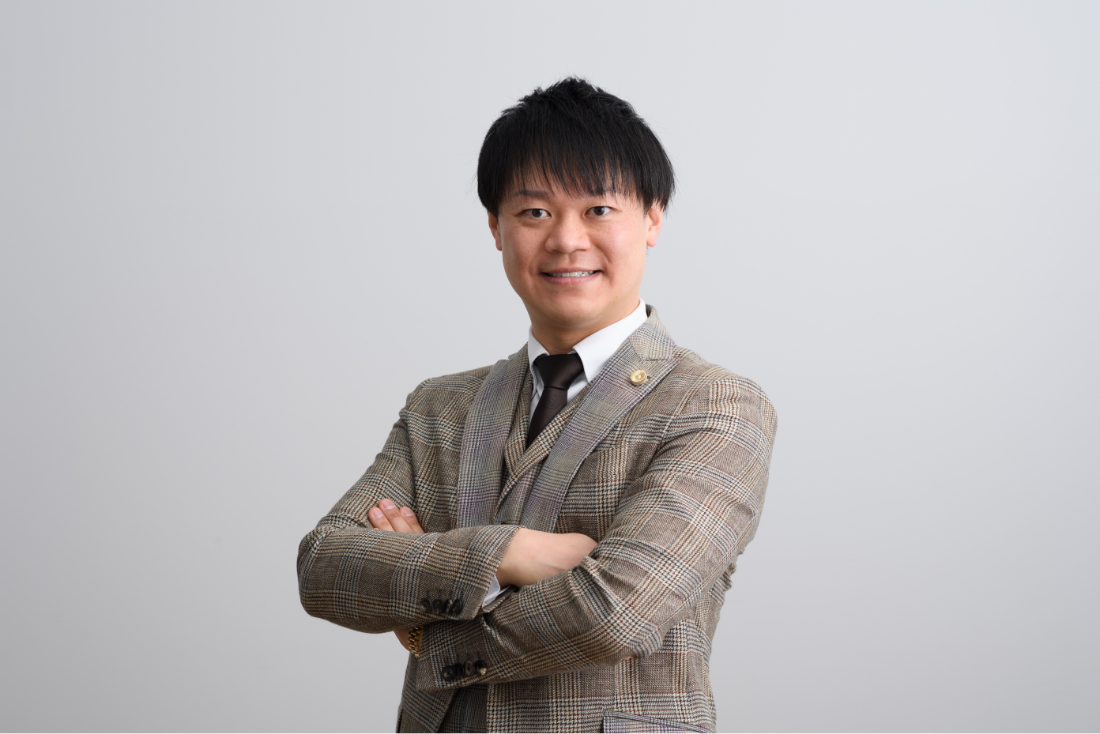
Representative Attorney, SAKURA Law Office
Kenshiro Michishita
Kenshiro Michishita
SAKURA Law Office has established the SAKURA Institute of Legal Studies as a forum for research and discussion, designed to reconsider the nature of law from the front lines of legal practice and to connect legal theory and practice more deeply.
Every day, SAKURA Law Office deals with concrete consultations, negotiations, litigation, contracts, and business-related legal issues brought to us by our clients. The primary mission of a law office is to protect the interests of the client before us, resolve concrete disputes, and propose the best practical measures for the difficult circumstances in which the client is placed. Yet the more sincerely we engage with actual cases and consultations, the more keenly we become aware that behind each individual matter lie broader issues concerning existing legal systems, precedents, practical customs, contract practice, and transaction structures themselves.
Legal practice is not merely the handling of cases. In the process of doing our utmost for our clients, we are constantly asked what is happening in society, what kinds of disadvantages are being overlooked, and whether existing legal doctrines and judicial practice are responding adequately to those problems. When the law fails to reach the realities of society, if lawyers simply trace existing explanations and stop thinking, neither client relief nor the development of law itself can be fully achieved.
As the Representative Attorney of SAKURA Law Office, I have long wished for our firm not only to engage sincerely in daily practice, but also to elevate the issues discovered through that practice into theory, construct deeper legal arguments, and make intellectual contributions to society. The field of practice contains opportunities to advance legal scholarship: concrete cases, the earnest voices of clients, tensions in transactions, difficulties in allegations and proof during litigation, imbalances hidden in a single clause of a contract, and differences in bargaining power revealed in negotiations. By carefully observing each of these realities, lawyers can discover issues that cannot be reached through abstract discussion alone.
At the same time, legal argument based only on practical experience may easily become ad hoc and lack sufficient universality or persuasive force. To construct arguments that can reach the courts, truly protect clients' interests, and lead to socially meaningful resolutions, precise theoretical examination is essential, grounded in statutes, precedents, academic theories, institutional purposes, comparative law, and historical context. Practice without theoretical support is fragile, and theory that loses sight of reality is empty. For this reason, I believe it is highly meaningful to establish within SAKURA Law Office a forum where practice and theory illuminate and question one another.
The SAKURA Institute of Legal Studies was born from this awareness. It is not merely a study group or training program, nor is it a public relations project of a law office. It is a continuing forum through which a law office, one of the places closest to real disputes, reflects deeply on its own practice, builds practice supported by more reliable theory, and at the same time raises new questions for legal theory from the field of practice. Through this forum, we hope to further strengthen our ability to fight for our clients and to build an intellectual foundation for improving the law itself.
We are honored to welcome Attorney Naoki Kanayama as the first Director of the SAKURA Institute of Legal Studies. Attorney Kanayama has long been engaged in research and education, mainly in civil law, comparative law, contract law, and prescription law, and as Professor Emeritus of Keio University, he has educated many researchers and legal professionals. He has accumulated deep knowledge in comparative law, particularly French law, as well as international transactions, arbitration, and contractual liability, while also being involved in legal practice as an attorney. Welcoming Attorney Kanayama, who possesses both the rigorous perspective of a scholar and the practical attitude of a lawyer facing real cases, symbolizes the very philosophy of the Institute.
For me, Attorney Kanayama is a deeply respected legal professional and a person from whom I continue to learn how law should be considered, developed, and connected to real justice. The vision of the SAKURA Institute of Legal Studies is not limited to simply creating a research function within the firm. Its true significance lies in creating a forum where young attorneys, practitioners, researchers, and others deeply involved in the field gather around Attorney Kanayama's scholarship, comparative perspective, deep concern for contract law, and intellectual stance of never resting on existing doctrine, so that they may learn from and challenge one another.
In the future, the SAKURA Institute of Legal Studies plans to hold forums and seminars and to engage in discussions with people from various backgrounds. What we wish to value there is not one-way lectures or merely formal presentations. Rather, we wish to bring together concerns arising from practice, issues discovered through research, methods of persuasion required in judicial practice, and new challenges emerging in business activities and transactions, and to discuss them candidly while questioning one another. For lawyers, discussion is not simply an intellectual activity. It is essential training for confirming how far one's ideas can withstand scrutiny, where their weaknesses lie, whether another construction is possible, and whether a more just solution can be found.
The SAKURA Institute of Legal Studies also aims to be a place of learning that transcends generations and affiliations. Lawyers do not become complete alone. They develop little by little by encountering excellent theory, receiving rigorous criticism, struggling with real cases, and sometimes revising their own views. If young attorneys can speak freely about their concerns, and experienced lawyers and researchers can respond sincerely while maintaining respect and intellectual rigor, meaningful results will surely emerge for both practice and theory.
For SAKURA Law Office, establishing such a forum is also a significant challenge. It is not easy for a law office occupied with daily case work to reflect on its own practice, pursue deeper legal reasoning, and make intellectual contributions to society. Yet I believe that having such an aspiration itself forms the dignity of a law office. We should not merely process cases. We should learn the law through cases, refine the law, and connect that learning to better practice. Such accumulation is what creates a law office truly trusted by its clients.
My role as Representative Attorney is to ensure that the SAKURA Institute of Legal Studies does not end as a temporary project, but takes root as a continuing intellectual endeavor. With Attorney Naoki Kanayama as the first Director, and while valuing his guidance and awareness of legal issues, I hope that each attorney at SAKURA Law Office will think more deeply about daily practice, construct more precise legal arguments, and fight more strongly and sincerely for our clients.
The SAKURA Institute of Legal Studies is still a new initiative. The themes it will address, the discussions it will develop, and the results it will present to society will gradually take shape through its future activities. However, the ideals we set forth at the beginning will greatly influence the path ahead. We will nurture the Institute not as a mere name for a research group, but as a continuing forum where lawyers face reality, study theory, challenge one another, and connect their learning to better legal practice.
Through the activities of the SAKURA Institute of Legal Studies, SAKURA Law Office aims not only to provide higher-quality legal services to our clients, but also to make meaningful intellectual contributions to both legal practice and legal scholarship. Starting from real disputes, refining practice through theory, and nurturing theory rooted in practice: if we can create such a cycle, the Institute will become a valuable forum for our firm, for each participant, and for society at large.
I sincerely ask for your understanding and support for the future activities of the SAKURA Institute of Legal Studies.
SAKURA Law Office
Representative Attorney Kenshiro Michishita