



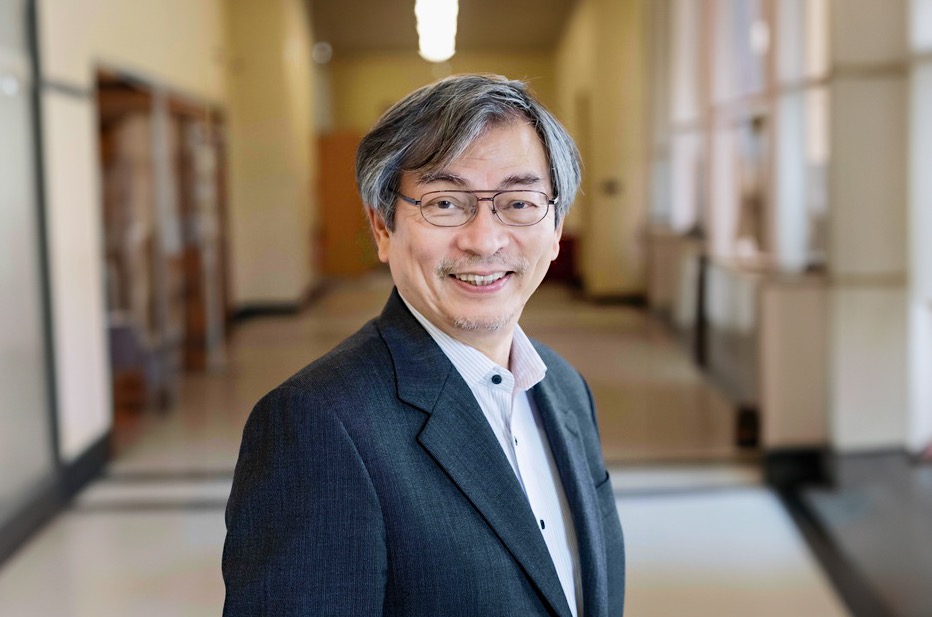
Director, SAKURA Institute of Legal Studies
Naoki Kanayama
Attorney at Law / Professor Emeritus, Keio University
Law is not a completed and fixed logical system. It develops dynamically in response to changes in society, and it must continue to develop. In every age, there is no such thing as immutable law. Change and development are the very life of law. Oliver Wendell Holmes, Jr. (1841-1935), in his classic work The Common Law, expressed the idea that law which has ceased to develop is dead law. He also stated in that work that the life of the law has not been logic; it has been experience. These words show that law is not completed by abstract logic alone, but is refined through social reality, human activity, the accumulation of history, and experience in the field of disputes. Based on his thorough realism and empiricism, Holmes emphasized the historicity of law, namely that law inevitably develops in correlation with society.
In this way, over time, a “repository of law” is formed. The existence of such a repository contributes to legal stability and predictability, and is therefore indispensable to the legal order. It is the natural duty of legal professionals to respect the accumulated precedents and academic theories contained there. However, they are neither fixed nor intended to prevent the development of law. To resolve new problems, we must understand the meaning and limits of past accumulation and shed light on realities that have not yet been sufficiently explained. To do so, we must refine existing frameworks and renew the contents of the repository of law. It is there that the life of law reveals itself. If law closes its eyes to social reality and confines itself within established theories, it cannot respond to people's trust. Law can continue to live only by being tested within living society and developing as necessary.
In reality, legal professionals must confront new issues presented to them every day. These issues arise from changes in social structures, transformations in social relationships, the increasing complexity of economic activity, the development of international transactions, advances in information technology, and changes in the power relationships between individuals and organizations. Transactional relationships, responsibility structures, forms of damage, and patterns of rights infringement that were once unimaginable now appear before us as concrete disputes. The question for today's lawyers is how dynamically law can respond to such unknown problems.
Yet in legal practice, existing precedents and academic theories are often treated as if they were everything. Legal briefs are written along those lines, and judgments are sometimes rendered accordingly. Of course, precedents and theories must not be disregarded. In litigation practice, accurately understanding past decisions and determining their scope is a fundamental ability of a lawyer. However, if we stop thinking after merely confirming existing precedents and theories, law becomes powerless in the face of social reality. Real disputes do not always fit neatly into existing categories. Rather, the newer the issue, the more likely it is to appear in a form that cannot be sufficiently captured by conventional legal doctrines. Lawyers must face that reality directly.
For new problems, legislation should ideally provide solutions. It is an important role of legislation to develop systems and establish clear rules in response to social change. In Germany and France, even amendments to civil codes, which are basic laws, are carried out frequently. However, not every problem can be addressed by legislation, nor can legislation immediately provide precise solutions to new issues arising in individual disputes. In Japan in particular, as seen from the results of the Civil Code reform, legal renewal through legislation is extremely cautious, and even rather passive, compared with Germany and France. Therefore, it is not realistic to expect the initiative for the development of law to come solely from legislation. Under these circumstances, lawyers must encourage courts to develop law through concrete cases.
To do so, practitioners themselves must not merely follow trends in past judgments, but must present new theoretical frameworks aimed at the development of law. To persuade courts, intuitive arguments of justice alone are insufficient. We must deeply understand existing legal doctrines, identify their limits, and then present persuasive constructions based on statutory provisions, precedents, academic theories, institutional purposes, and social realities. In the case before us, seeking relief for a client is directly connected to constructing theories that contribute to the future development of law. It is precisely within difficult cases that opportunities for legal development are hidden. I believe that it is an honorable mission entrusted to legal practitioners to find those opportunities, actively promote legal change, and lead the direction of that development.
The SAKURA Institute of Legal Studies is a strategic center for creating “weapons” that breathe new life into law and for developing “tactics” to use them. Here, “weapons” do not mean merely technical arguments or convenient litigation strategies. They mean legal theories themselves, capable of accurately grasping social reality, identifying the limits of existing doctrines, and presenting new legal constructions in language that can reach the courts. “Tactics” do not mean methods concerned only with winning or losing individual cases. They mean practical techniques for moving the law through concrete disputes, guiding decisions toward justice, and connecting them to the future development of law. Above all, we must develop tactics capable of overcoming the barriers to petitions for acceptance of final appeals. The SAKURA Institute of Legal Studies seeks to be a place where such theory and practice are refined.
As part of its activities, the SAKURA Institute of Legal Studies plans to hold forums and seminars on a regular basis. These will not be mere opportunities for transmitting knowledge or holding lectures. They will be places where businesspeople facing new issues at the front lines of practice, those with insight into judicial practice, researchers who deeply explore legal theory, and attorneys bring their respective experiences and expertise together for serious discussion. The goal there is not merely to confirm the repository of law. It is to refine concepts, polish theories, and elevate them into legal constructions that can withstand practice. The development of law cannot be achieved through abstract ideals alone. Only where concrete cases, rigorous theory, and candid discussion come together can new possibilities for legal development arise.
To achieve this goal, the SAKURA Institute of Legal Studies will establish a system of “Cast Members.” This will open the door widely to corporate professionals, attorneys belonging to other law offices, those with deep knowledge of judicial practice, and university researchers. The development of law cannot be accomplished within a single position, a single specialty, or a single organization. Strong legal doctrines are born only when those who handle disputes in the field, those familiar with judicial reasoning, and those who systematically explore theory respect one another's positions while engaging in frank discussion. We hope to nurture the SAKURA Institute of Legal Studies as a place where cast members gather regularly, learn from one another, and engage in serious discussion.
What themes to challenge and what approaches to take will be left to the discretion of each cast member. We wish to begin from the sense of unease that each person feels when handling real cases: problems that existing legal doctrines cannot fully explain, insufficient questions, and issues arising from the field itself. International transactions, arbitration, contracts, liability, damages, corporate activities, consumer transactions, professional responsibility, civil procedure, comparative law, and other fields all contain many issues to address. What matters is not the name of the field. What matters is to challenge the question of whether justice is truly being realized under existing legal doctrines, whether real-world unfairness is being adequately captured, and whether a better legal construction can be presented.
I myself, alongside international transactions and arbitration, have long been concerned with how to address exploitation carried out under the name of contract in modern society. Contracts are, in principle, important institutions that form rights and obligations based on the parties' intentions and support the stability and freedom of transactions. In reality, however, the existence of a contractual form can sometimes conceal serious injustice. There are contracts that significantly undermine fairness between the parties, specifically contracts that impose all risks and responsibilities on one party while securing only the benefits of the other. Should such contracts be accepted as they are merely because, formally, there is agreement? This is precisely a problem that modern contract law must face directly.
How can law respond to such asymmetric contractual structures? Freedom of contract is an important principle. However, it must not protect the freedom of the strong to impose disadvantages on the weak. Between parties with significant differences in information, bargaining power, expertise, financial strength, and dependence on continuing transactions, a contract may appear to contain consent on paper, while in substance one party has no choice but to accept extremely disadvantageous terms. If law looks only at form and ignores substance in such situations, it loses its power to realize justice. The question is how to respect the binding force of contracts while also identifying the imbalance and unfairness behind them and realizing justice.
The theory of assistants in contract formation that I propose is one possible prescription for this issue. In modern transactions, contracts are not always concluded solely through simple expressions of intent between the parties themselves. In the process of contract formation, advisers, intermediaries, experts, transaction-related persons, and others may become involved and influence the decision-making of the parties. Because such persons ultimately do not become parties to the contract, it is difficult to attribute their unlawful conduct to the contractual counterparty. The theory of assistants in contract formation presents a framework for attributing the unlawful conduct of such assistants to the contractual counterparty and seeks to construct a more just structure of responsibility.
Facing the issues of our time, what legal doctrines shall we use to realize justice? Let us envision the law of tomorrow together. This is an attempt not only to resolve the problems of individual clients, but also to refine civil law and other basic legal doctrines and to construct new theories that broadly realize relief for victims and fairness in transactions. It is not an easy task. We must accurately read the scope of existing precedents and theories, identify their limits, and search for theoretical breakthroughs. Our constructions must be persuasive enough to be accepted by courts and, at the same time, withstand academic scrutiny. Yet it is precisely within this difficulty that the most intellectual and creative appeal of legal practice lies.
The SAKURA Institute of Legal Studies is, above all, a place to discover problems that cannot be solved by existing legal doctrines. Problems do not always appear with clear names attached to them. In many cases, they appear as a sense of unease in the field. Why is this harm not remedied? Why is this disadvantage not sufficiently evaluated legally? Why does the location of responsibility remain ambiguous? The starting point is to take such questions seriously and share them among cast members. We then hope to search together for theories to solve them. When people with different experiences and expertise gather and examine one problem from multiple perspectives, new horizons should open that cannot be reached by individual contemplation alone.
The reason we plan to include research meetings called forums in the Institute's program is that we wish to receive the sense of unease from the field and, above all, explore new possibilities together through discussion. Discussion is not merely the exchange of opinions. It is a rigorous practice of exposing one's own ideas to criticism, questioning assumptions, refining concepts, clarifying weaknesses in arguments, and finding theories that can still be maintained. Theories that contribute to the development of law are not born from mere inspiration. Only when the ability to see the facts of a case, construct legal doctrine, survey the entire system, and persuade courts is refined through discussion do such theories become capable of withstanding practice. The SAKURA Institute of Legal Studies aims to become such a place of serious and active discussion.
The SAKURA Institute of Legal Studies is committed to fighting for clients while developing law itself into something better. This cannot be fully captured by phrases such as bridging legal theory and practice or further integrating legal practice and legal theory. Of course, it is important for theory and practice to learn from each other. However, the Institute aims for more than that. It seeks to face directly those situations in which justice cannot be sufficiently realized within existing legal theories or precedents, and in such situations to improve the law itself into something better and more just.
Law exists to solve the real problems of people. When faced with the concrete suffering and disadvantages of clients, lawyers must not abandon them simply because existing theories make relief difficult. It is in imagining the landscape that should lie beyond that point and moving toward it that the true responsibility and appeal of lawyers can be found. How should statutes be read, how should the scope of precedents be understood, in what direction should academic theories be developed, and how should new theories be presented? I believe that the accumulation of such efforts will go beyond the resolution of individual cases and gradually move law itself forward.
The above describes what the SAKURA Institute of Legal Studies seeks to achieve. Receiving issues raised from the front lines of practice, cast members will learn from and challenge one another, while taking into account existing precedents and theories and, when necessary, going beyond them. I hope that the Institute will grow into a forum capable of contributing to the development of law. Through such efforts, I hope that the SAKURA Institute of Legal Studies will not only meet the expectations of clients, but also make a modest contribution to the future development of law.
Director, SAKURA Institute of Legal Studies
Attorney-at-Law Naoki Kanayama