

 日本語
▼
日本語
▼
 English
日本語
English
日本語
Introduction to lawyers, etc.
LAWYER
INTRODUCTION
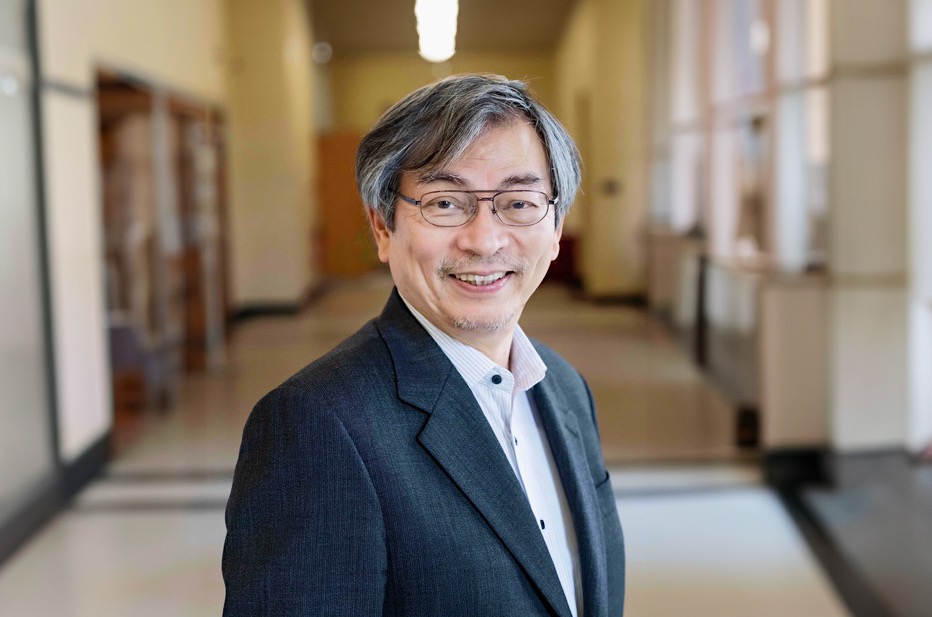
Naoki Kanayama
Attorney at law
NAOKI KANAYAMA
| 1981 Master of Laws in Private Law, Graduate School of Law, Doshisha University |
| 1982 B.A. in Law, Knox College (IL, USA) ・Graduated cum laude |
| 1984 Completed Doctoral Coursework without Degree (Civil and Criminal Law), Graduate School of Law, Kyoto University |
| 1986 DEA de Droit privé, Paris 1 Panthéon-Sorbonne University |
| 1996 Ph.D. in Law, Kyoto University Dissertation: "The Trajectory of the Development of Prescription Theory: Tradition and Transformation in Civil Law Civil Jurisprudence" |
| 1988 Associate Professor, Faculty of Law, Himeji Dokkyo University |
| 1996 Professor, Faculty of Law, Himeji Dokkyo University |
| 1997 Professor, Faculty of Law, Hosei University |
| 2003 Professor, Office for the Establishment of the Law School, Keio University |
| 2004 Professor of Law, Keio University Law School |
| 2018 Admitted to the Bar (Tokyo Bar Association) |
| 2020 Professor Emeritus, Keio University |
| 2023 Director, Maison du Japon, Cité Internationale Universitaire de Paris |
| 2026 Joined SAKURA Law Office |
profile
Although I earned my degree from an American university in my youth (Knox College, IL, USA, 1982), I ultimately pursued a career as a civil law scholar, focusing on French law as my primary subject of comparative analysis. My research has centered around statutes of limitations and contract law. A comprehensive bibliography of my work can be found in Tradition and Transformation in Civil Jurisprudence: Essays in Honor of Professor Naoki Kanayama’s 70th Birthday (2025). My life’s work is a new translation of Discours préliminaire du premier projet de Code civil by Jean-Étienne-Marie Portalis, one of the drafters of the French Civil Code—a project that took over 15 years and was published in 2024. While my primary affiliation was with Keio University, I also spent nearly 20 years at Waseda University, leading civil law seminars and teaching French law in the graduate school.
Among legal professionals, I consider myself highly proficient in both English and French, and I can also speak German reasonably well. I have published approximately 20 papers in foreign languages—mostly in French—which are scheduled to be compiled and published as a book in France in the near future.
When I joined Keio University for the launch of its law school, I introduced a course on "Comparative Contract Law" taught in English, which was later integrated into the Keio LL.M. program. I have also taught this same course in French on several occasions at universities in France. While I was never fond of lecturing in large auditoriums, I found interactive classes—especially with international students—to be incredibly stimulating. The unpredictable nature of their questions and insights was exciting, and I truly felt it helped cultivate the ability to respond instantly and deftly on the spot—a skill that is arguably the most critical asset in international arbitration.
As a scholar, I proposed the "Theory of Assistants in Contract Formation" (Theory of Assistants in Contract Formation) in an effort to challenge business models that unilaterally shift contractual risks, such as fraud, onto other parties. (e.g., Theory of Assistants in Contract Formation, Part 2: Reflecting on the Lloyds-Suruga Bank Case, Doshisha Hogaku, Vol. 68, No. 7, 2017). Furthermore, with the inception of the law school system, I wanted to challenge myself in new fields and began teaching arbitration law. I also joined a study group on investment arbitration, focusing my research primarily on corruption. My most recent publication on this topic is Corruption and Investment Arbitration: The Forefront of Set-Aside Proceedings of Arbitral Awards in France (Arbitration and ADR Forum, No. 9, 2025). As my retirement from Keio approached, I completed a training program on arbitration at a law firm in city of Paris during spring break, and the lecture I delivered on that theme was subsequently published in a legal journal.
I registered as an attorney in 2018, initially prompted by an offer to serve as corporate counsel for a close friend’s company. Around the same time, another friend asked me to represent their daughter, who had been a victim of sexual harassment. When I searched for literature to prepare the case, I realized there was a complete lack of viable legal theories applicable to actual litigation. In response, I developed a practical framework myself, publishing Sexual Acts and Consent: Freedom and Coercion Under Structural Inequality (Hogaku Kenkyu, Vol. 92, No. 9, 2019) and Sexual Acts and Damages: Toward a Reconstruction of Solatium, Parts 1 & 2 (Hogaku Kenkyu, Vol. 93, Nos. 2 & 3, 2020).
As detailed above, I have advanced research across diverse fields as both a scholar and a practitioner. On the legal practice side, I had been working at Toranomon Hogakusha Law Office, run by my longtime friend since my Hosei University days, Mr. Junichi Takasu. However, following his appointment to the Supreme Court, it became necessary for me to leave the firm.
Now, through a fortunate turn of events, I have joined SAKURA Law Office, a firm that handles an exceptionally wide array of legal matters. My sole desire is to be of service and make a meaningful contribution to our clients. I look forward to dedicating the full measure of my experience and capabilities to every case I undertake.